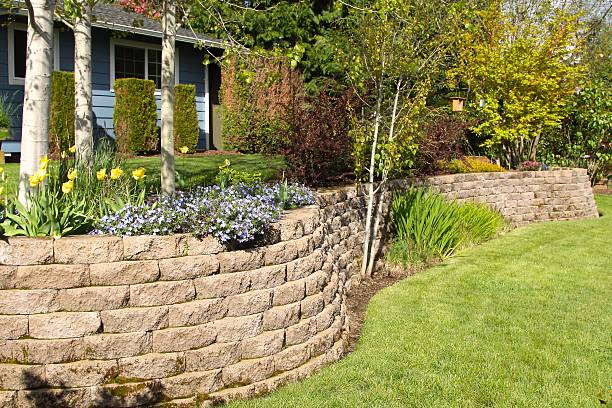
Retaining Walls: Combining Usability, Benefits, and Aesthetics
Retaining walls are structures designed to hold back soil or other materials, preventing them from sliding or eroding. They are commonly used in landscaping, civil engineering, and construction. Their primary purposes include:
1.Soil Stabilization: Retaining walls prevent soil from moving downhill due to gravity, especially on sloped terrain. This helps maintain the integrity of the landscape.
2.Erosion Control: They reduce soil erosion caused by water runoff or wind, protecting the land and structures.
3.Creating Usable Space: Retaining walls can transform sloped areas into flat, functional spaces for gardens, driveways, or building foundations.
4.Structural Support: They provide support to vertical or near-vertical grade changes, ensuring the stability of roads, bridges, and buildings.
5.Aesthetic Enhancement: Retaining walls can improve the visual appeal of a property by adding structure and design to the landscape.
Benefits of Retaining Walls:
1.Prevents Landslides: By holding back soil, retaining walls reduce the risk of landslides or slope failures, especially in hilly or uneven areas.
2.Increases Property Value: Well-designed retaining walls enhance the usability and appearance of a property, potentially increasing its market value.
3.Reduces Maintenance: By controlling erosion and soil movement, retaining walls minimize the need for frequent landscaping or repairs.
4.Improves Drainage: Properly constructed retaining walls often include drainage systems that redirect water, preventing waterlogging and soil saturation.
5.Versatility: Retaining walls can be built using various materials (e.g., concrete, stone, wood, or brick) to suit different aesthetic and functional needs.
6.Safety: They provide structural stability, reducing the risk of accidents caused by collapsing soil or uneven terrain.
7.Cost-Effective Solution: Retaining walls are often more economical than other methods of slope stabilization or land modification.
In summary, retaining walls serve both practical and aesthetic purposes, offering significant benefits in terms of stability, safety, and property enhancement.